How to meditate while driving
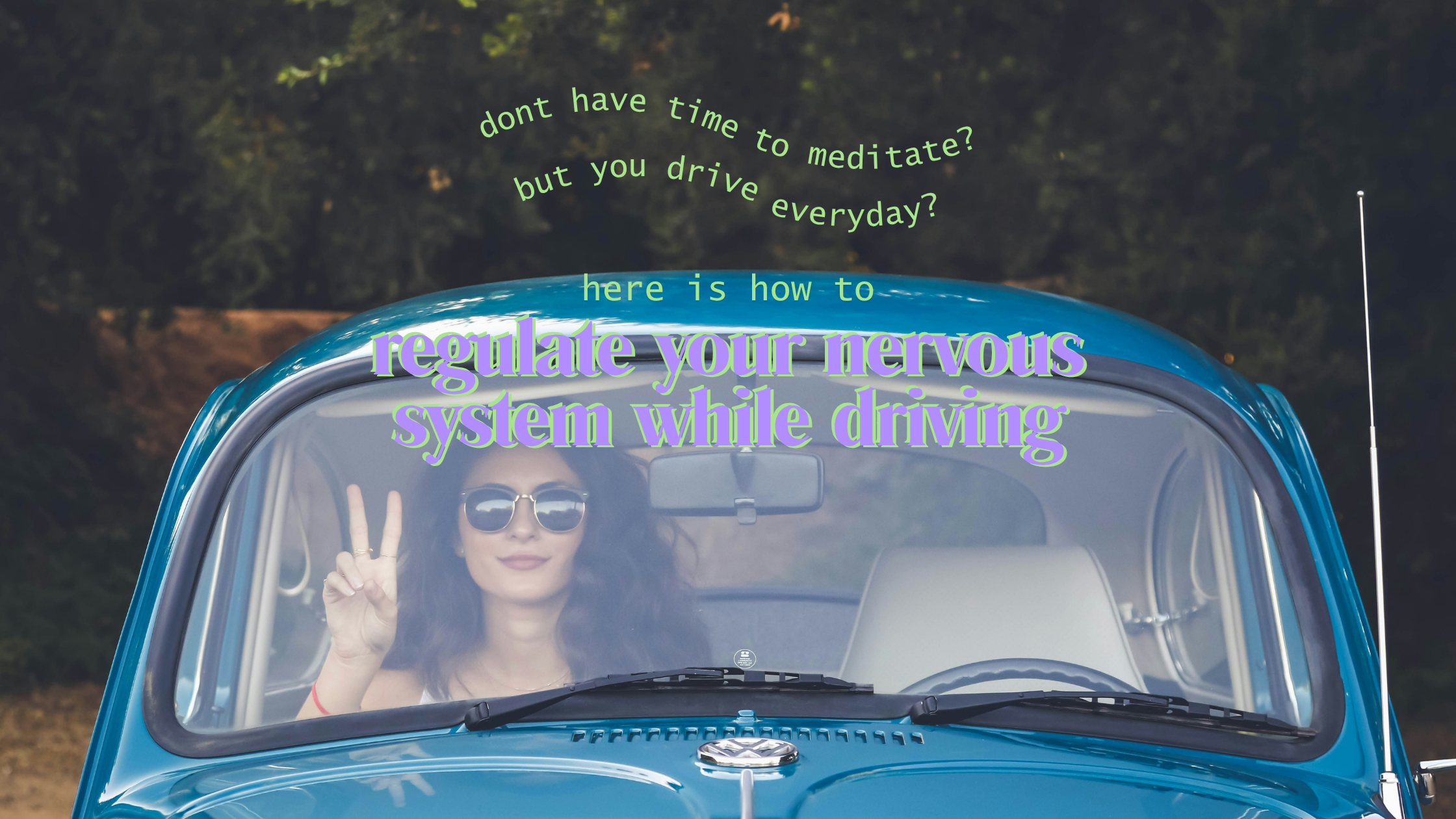
Have You Tried Driving Meditation? I know… that sounds questionable at first.
But stay with me, because this might be one of the easiest and most realistic ways to start training your mind, especially if you feel like you don’t have time to sit still and meditate.
This isn’t about zoning out. It’s not about emptying your mind. And it’s definitely not about doing anything unsafe. It’s about training your brain to focus on one thing at a time, and create more control over a wandering mind.
What is Driving Meditation?!
Driving meditation is simply focusing 100% on driving.
No podcast.
No audiobook.
No music with lyrics pulling your attention.
No distractions.
And then, naturally, your brain will do what it’s use to, it will start to wander. It will jump to random thoughts, plans, conversations, things you can’t forget to do.
And it’s important to know that this wandering isn’t “doing it wrong”. That’s literally the practice. Every time you notice your mind has drifted, the goal is to notice and gently bring it back to driving. Again and again and again. That repetition to refocus is what trains your brain.
Why This Works So Well
Most people think meditation means sitting still in silence for 10 to 20 minutes. And while that’s one way to do it, it’s not the only way. The real goal of meditation is learning how to:
Notice your thoughts
Redirect your focus
Stay present
Driving gives you a built in opportunity to practice this. You’re already there driving, you may as well put some intention behind teaching your brain to not need constant entertainment.
Think of this less like meditation and more like training your brain. In todays world, most people’s minds are constantly overstimulated. There is usually some form of entertainment: music, podcast, audiobook, how to video, notifications, emails. Even “guided meditations”, sure they are relaxing and help your nervous system but they DO NOT train your brain in the same way. When you are being guided by someone talking, you don’t have a change to practice centering your attention because the guide talking keeps you “entertained”. Your brain rarely gets a break from input so it is so unsure how to respond when there is no incoming information. It has gotten use to jumping, reacting, and constantly seeking stimulation. That’s why overthinking feels so automatic, yet it is still so exhausting.
When you practice focus, even for a few minutes, you’re teaching your brain something different. You’re building capacity to be in silence and teaching your brain to take a true break, possibly for the first time in your life! That’s where a sense of control starts to come in.
HOW TO GET STARTED:
Practice Anywhere
Driving is just one example. This same idea can be applied to so many areas of your day. Any time you’re doing something routine and usually pairing it with distraction, you have an opportunity.
Try it while:
Cleaning
Cooking
Walking
At the gym
Waiting in line
Even getting ready in the morning
Turn off the extra noise, put down the phone. And for just a few minutes, practice being fully in what you’re doing. Notice when your mind drifts. Bring it back. That’s it.
Start Small
You don’t need to do this for long. Start with 1-5 minutes. If you were unable to focus in that time, set another timer and try again. Even one or two minutes of intentional focus, when done consistently for at least a month, is enough to begin shifting how your mind feels.
The benefits you can expect
Overthinking isn’t just annoying. It’s draining. It pulls you out of your life and into constant mental noise. If you want to feel calmer, clearer, and more in control of your thoughts, it doesn’t come from avoiding thinking. It comes from training your attention, and that can happen by putting intention behind moments you already have.
Over time, it becomes easier to notice when your thoughts are spirally, create space for a break so you feel less mentally overwhelmed, and find more joy in the moments you are able to be present in your life.
If You Want to Go Deeper With This
If this concept clicks for you, this is exactly the kind of mindset and mental training I teach inside Mindset Medicine. Not in a complicated or time consuming way, but in a way that actually fits into your real life. You learn how to:
Work with your mind instead of feeling controlled by it
Build focus and reduce mental overwhelm
Create habits that support your nervous system, not stress it out
Because when your mind feels clearer, everything else becomes easier.